中国安全科学学报 ›› 2026, Vol. 36 ›› Issue (5): 139-149.doi: 10.16265/j.cnki.issn1003-3033.2026.05.1332

• 安全技术与工程 • 上一篇    下一篇

SPDs-Conv与WIoU优化的YOLOv8n矿井井下人员检测模型

荣海1,2(), 习洲勇1,2,**(), 李锦程1, 潘相伊3, 张伟达1, 韩明玉4   

  1. 1 辽宁工程技术大学 矿业学院, 辽宁 阜新 123000
    2 辽宁工程技术大学 鄂尔多斯研究院, 内蒙古 鄂尔多斯 017010
    3 中国建筑东北设计研究院有限公司, 辽宁 沈阳 110004
    4 鄂尔多斯市昊华精煤有限责任公司, 内蒙古 鄂尔多斯 017200
  • 收稿日期:2025-12-01 修回日期:2026-02-26 出版日期:2026-05-28
  • 通信作者:
    ** 习洲勇(1999—),男,江西吉安人,硕士研究生,研究方向为矿山安全与矿井动力灾害防治。E-mail:
  • 作者简介:

    荣 海 (1988—),男,辽宁沈阳人,博士,副教授,主要从事矿山安全与矿井动力灾害防治等方面的研究。E-mail:

  • 基金资助:
    2024年辽宁省引导地市科技发展专项项目(20240341); 辽宁工程技术大学鄂尔多斯研究院校地培育项目(YJY-XD-2024-A-014)

YOLOv8n-based personnel detection model for underground mines optimized with SPDs-Conv and WIoU

Rong Hai1,2(), Xi Zhouyong1,2,**(), Li Jincheng1, Pan Xiangyin3, Zhang Weida1, Han Mingyu4   

  1. 1 College of Mining, Liaoning Technical University, Fuxin Liaoning 123000, China
    2 Ordos Research Institute, Liaoning Technical University, Ordos Inner Mongolia 017010, China
    3 China Northeast Architectural Design & Research Institute Co., Ltd., Shenyang Liaoning 110004, China
    4 Ordos City Haohua Coking Coal Co., Ltd., Ordos Inner Mongolia 017200, China
  • Received:2025-12-01 Revised:2026-02-26 Published:2026-05-28

摘要:

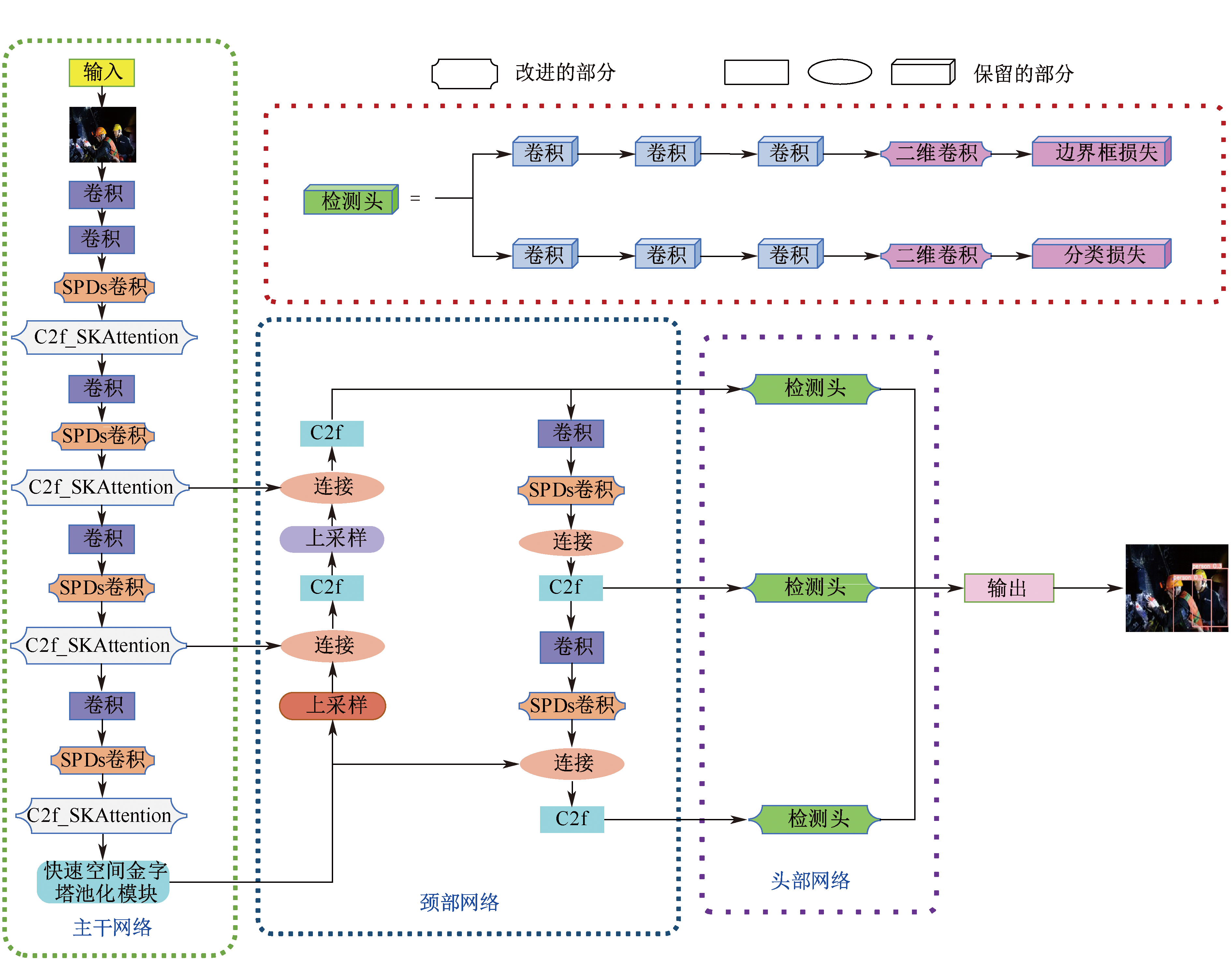
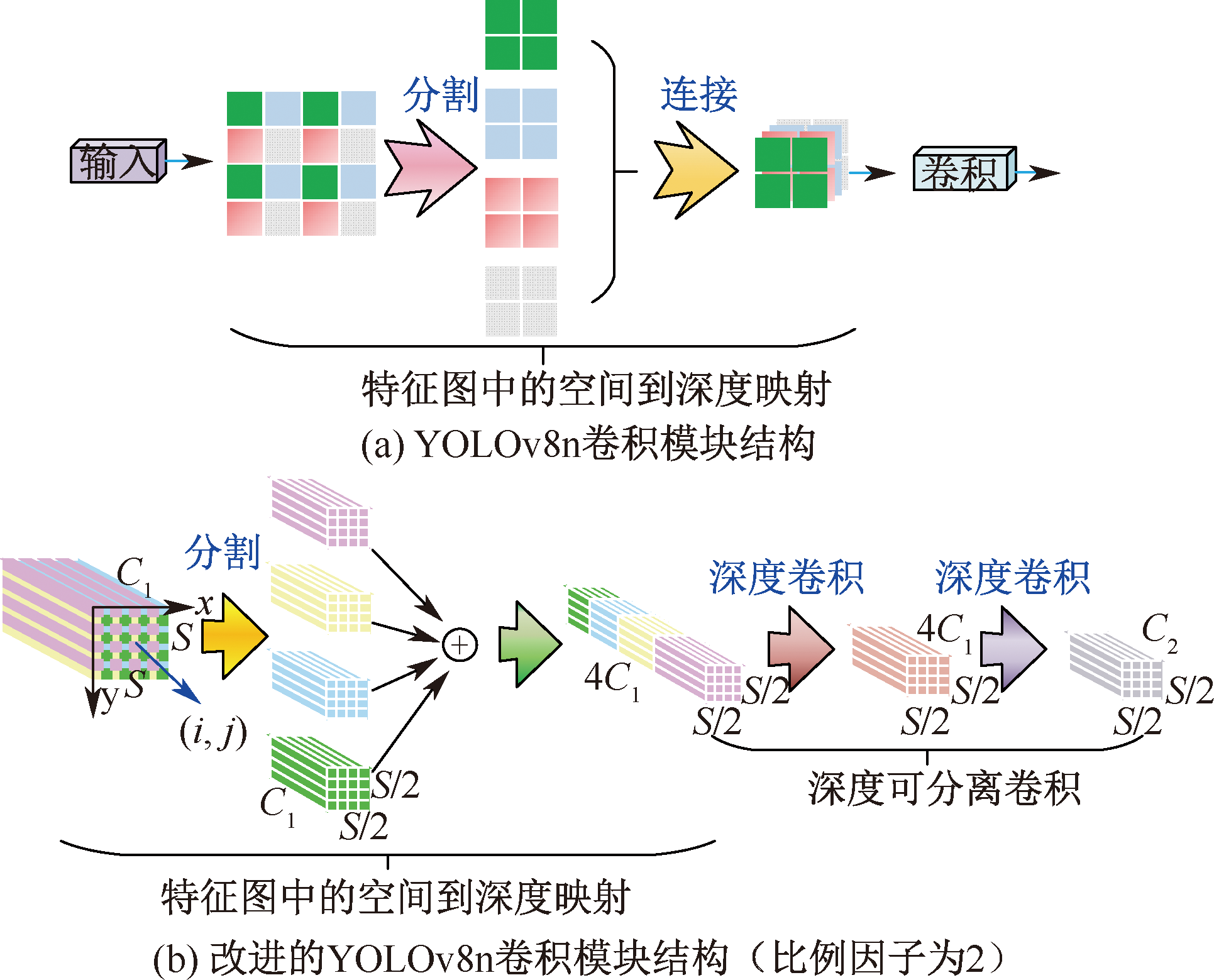
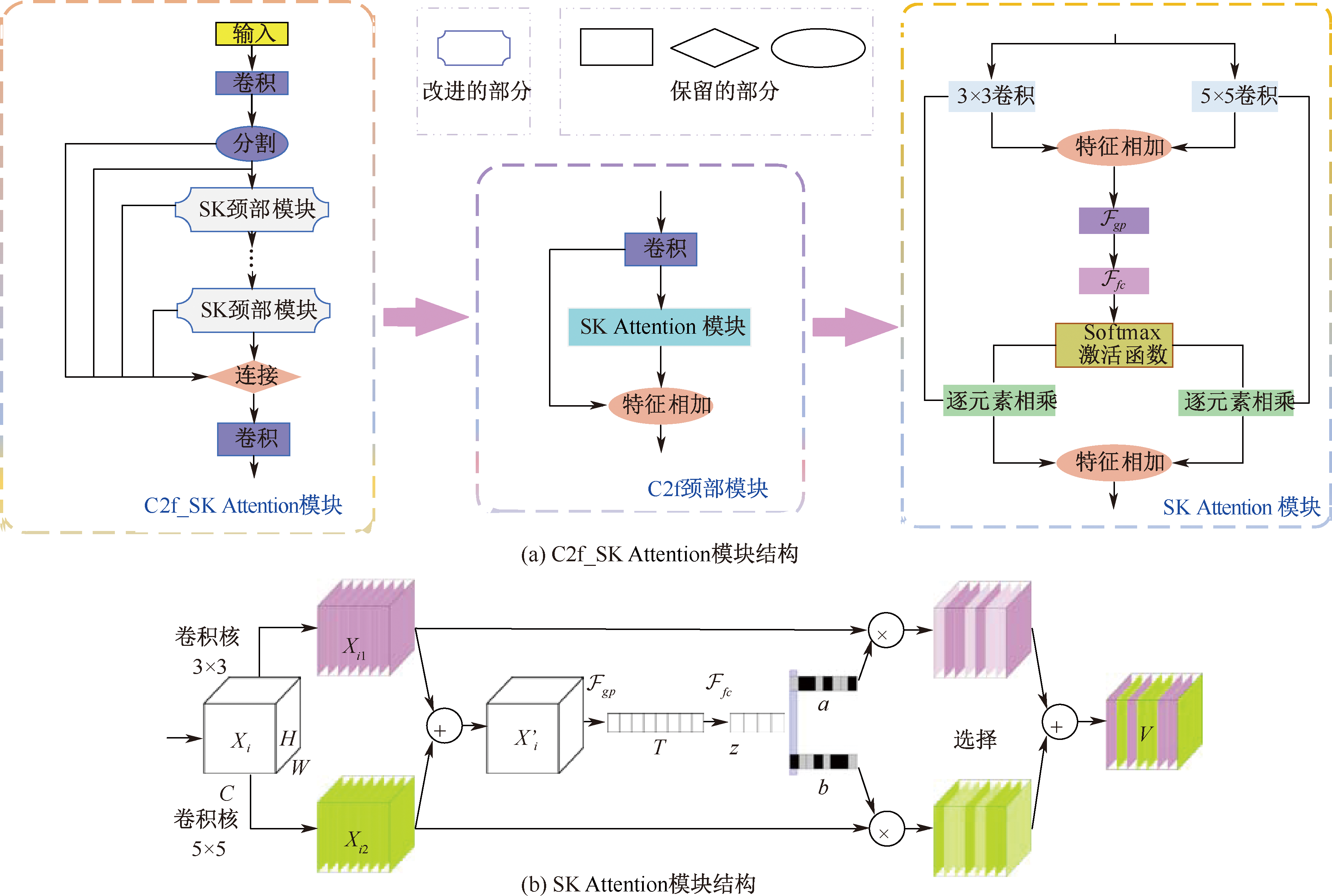
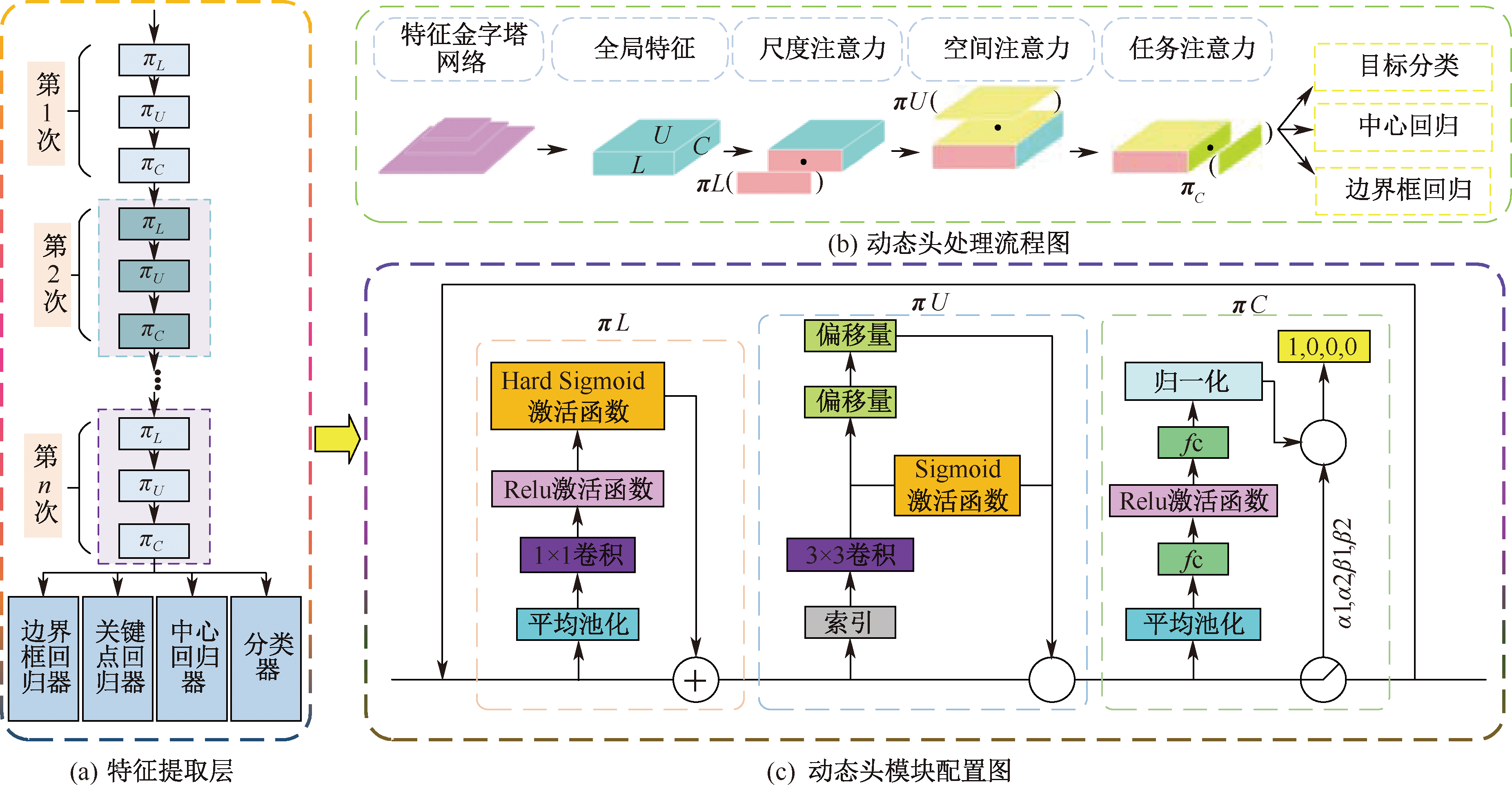
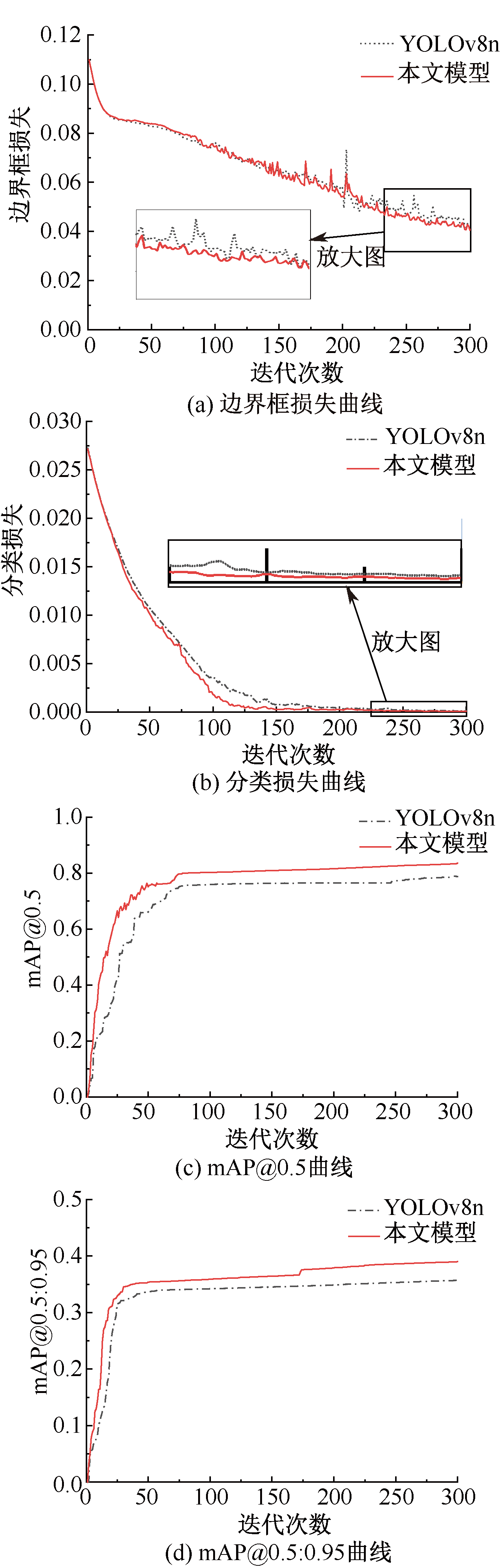
为解决煤矿井下环境由于光照不足、人员尺度差异大及易被设备遮挡等问题而导致的现有检测算法精度低、鲁棒性弱,且部分模型参数量和计算量偏高,难以适配井下边缘设备问题,提出一种改进的YOLOv8n模型,优化矿井复杂环境下的人员检测任务。引入改进的空间到深度可分离卷积(SPDs-Conv)模块增强小目标特征提取能力,提升对远景低像素人员的识别精度;跨阶段部分特征融合+选择性注意力机制(C2f_SKAttention)强化模型对不同尺度目标的关注度,应对井下人员尺度差异;构建动态检测头以适应目标多样性与复杂性,提高对遮挡等场景的适配性;改进加权交并比(WIoU)损失函数提升边界框定位精度,减少因低照度导致的定位偏差。结果表明:提出的改进YOLOv8n模型在煤矿井下人员检测数据集上的平均精度均值(mAP)@0.5为83.5%、mAP@0.5:0.95为39.0%,相较于原YOLOv8n,精确率提升8.5%,召回率提升11.9%,mAP@0.5提升4.7%,mAP@0.5:0.95提升3.3%;参数量从3.1M增至3.2M,浮点运算数(GFLOPs)从14.0G增至14.4G,在轻量化基础上提升了检测精度与鲁棒性,有助于解决井下小目标漏检、多尺度适配不足及复杂环境抗干扰弱等问题,适配井下边缘设备算力限制。

关键词: 空间到深度可分离卷积(SPDs-Conv), 加权交并比(WIoU), YOLOv8n, 井下人员检测, 轻量化, 注意力机制, 损失函数

Abstract:

To address the issues of low accuracy and weak robustness in existing detection algorithms due to insufficient lighting, scale differences among personnel, and frequent obstruction by equipment in coal mine environments, as well as the challenges posed by high parameter and computational requirements of some models, which make them difficult to adapt to edge devices underground, an improved YOLOv8n model was proposed to optimize personnel detection tasks in complex mine environments. An enhanced SPDs-Conv module was introduced to enhance the extraction of small target features and improve the recognition accuracy of low-pixel personnel in distant views. Cross stage partial feature fusion + selective kernel attention (C2f_SKAttention) module was designed to strengthen the model's focus on targets of different scales and cope with the scale differences of underground personnel. A dynamic detection head was constructed to adapt to the diversity and complexity of targets, and to improve robustness to occlusion and other scenarios. The WIoU loss function was improved to increase the bounding box localization accuracy and reduce the localization deviation caused by low illumination. The results show that the proposed improved YOLOv8n model achieves an mean average precision (mAP) @0.5 of 83.5% and an mAP@0.5:0.95 of 39.0% on the mine personnel detection dataset. Compared with the original YOLOv8n, the P is improved by 8.5%, the R by 11.9%, the mAP@0.5 by 4.7%, and the mAP@0.5:0.95 by 3.3%. The number of parameters only increases from 3.1M to 3.2M, and the Giga Floating-point operations per second (GFLOPS) rises from 14.0G to 14.4G. The proposed model maintains a lightweight structure while improving detection accuracy and robustness. It effectively alleviates missed detection of small underground targets, insufficient multi-scale adaptation and weak anti-interference capability in complex environments, making it suitable for the limited computing power of underground edge equipment.

Key words: space-to-depth separable convolution (SPDs-Conv), weighted intersection over union (WIoU), YOLOv8n, underground personnel detection, lightweighting, attention mechanism, loss function

中图分类号: