| [1] |
姜垣良, 任庆滢, 任远, 等. 基于改进YOLO模型的中缅油气管道遥感图像高后果区识别方法[J]. 中国安全科学学报, 2025, 35(1):103-111.
doi: 10.16265/j.cnki.issn1003-3033.2025.01.0632
|
|
JIANG Yuanliang, REN Qingying, REN Yuan, et al. High-consequence area identification of remote sensing images of China-Myanmar oil and gas pipeline based on improved YOLO model[J]. China Safety Science Journal, 2025, 35(1): 103-111.
doi: 10.16265/j.cnki.issn1003-3033.2025.01.0632
|
| [2] |
宫运华, 张喆. 油气管道事故应急失效原因及社会网络分析[J]. 中国安全科学学报, 2025, 35(1):209-215.
doi: 10.16265/j.cnki.issn1003-3033.2025.01.1536
|
|
GONG Yunhua, ZHANG Zhe. Failure causes of emergency response in oil and gas pipeline accidents and social network analysis[J]. China Safety Science Journal, 2025, 35(1): 209-215.
doi: 10.16265/j.cnki.issn1003-3033.2025.01.1536
|
| [3] |
HUANG Songling, PENG Lisha, SUN Hongyu, et al. Deep learning for magnetic flux leakage detection and evaluation of oil & gas pipelines: a review[J]. Energies, 2023, 16(3): DOI: 10.3390/en16031372.
|
| [4] |
王轲, 黄成橙, 王鹏. 深度学习在油气管道漏磁检测领域的应用[J]. 无损检测, 2024, 46(12):93-99.
|
|
WANG Ke, HUANG Chengcheng, WANG Peng. Application of deep learning in magnetic leakage detection of oil and gas pipelines[J]. Nondestructive Testing, 2024, 46(12):93-99.
|
| [5] |
WU Linyu, LIANG Wei, SHA Duolin. A novel adaptive noise reduction method for field natural gas pipeline defect detection signals[J]. International Journal of Pressure Vessels and Piping, 2022, 199: DOI: 10.1016/j.ijpvp.2022.104761.
|
| [6] |
武琳玉, 梁伟, 沙夺林. 油气站场典型设备的焊缝缺陷检测与识别方法[J]. 中国安全科学学报, 2020, 30(11):108-113.
doi: 10.16265/j.cnki.issn 1003-3033.2020.11.016
|
|
WU Linyu, LIANG Wei, SHA Duolin. Weld defect detection and identification method of typical equipment in oil-gas station[J]. China Safety Science Journal, 2020, 30(11): 108-113.
doi: 10.16265/j.cnki.issn 1003-3033.2020.11.016
|
| [7] |
SHA Duolin, LIANG Wei, WU Linyu. A novel noise reduction method for natural gas pipeline defect detection signals[J]. Journal of Natural Gas Science and Engineering, 2021, 96: DOI: 10.1016/j.jngse.2021.104335.
|
| [8] |
WANG Shuaishuai, LIANG Wei, SHI Fang. Identification of coating layer pipeline defects based on the GA-SENet-ResNet18 model[J]. International Journal of Pressure Vessels and Piping, 2024, 212: DOI: 10.1016/j.ijpvp.2024.105327.
|
| [9] |
李友家, 张忠伟, 焦宗豪, 等. 强噪声干扰下基于SVMD-FFCNN的深沟球轴承故障分类模型[J]. 机电工程, 2025, 42(4):686-696.
|
|
LI Youjia, ZHANG Zhongwei, JIAO Zonghao, et al. Fault classification model of deep groove ball bearing under strong noise interference based on SVMD-FFCNN[J]. Journal of Mechanical & Electrical Engineering, 2025, 42(4):686-696.
|
| [10] |
KILADZE M. Application of bidirectional LSTM neural networks and noise pre-cleaning for feature extraction on an electrocardiogram[C]. International Conference on Actual Problems of Applied Mathematics and Computer Science (APAMC), 2022:421-429.
|
| [11] |
|
| [12] |
PICHIKA S V V S N, KASAM V, RAJASEKHARAN S G, et al. Automatic signal denoising and multi-component fault classification based on deep learning using integrated condition monitoring in a wind turbine gearbox[J]. Journal of Vibration Engineering & Technologies, 2024, 12(7): DOI: 10.1007/s42417-024-01380-6.
|
| [13] |
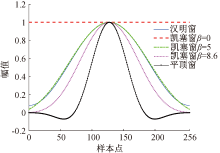
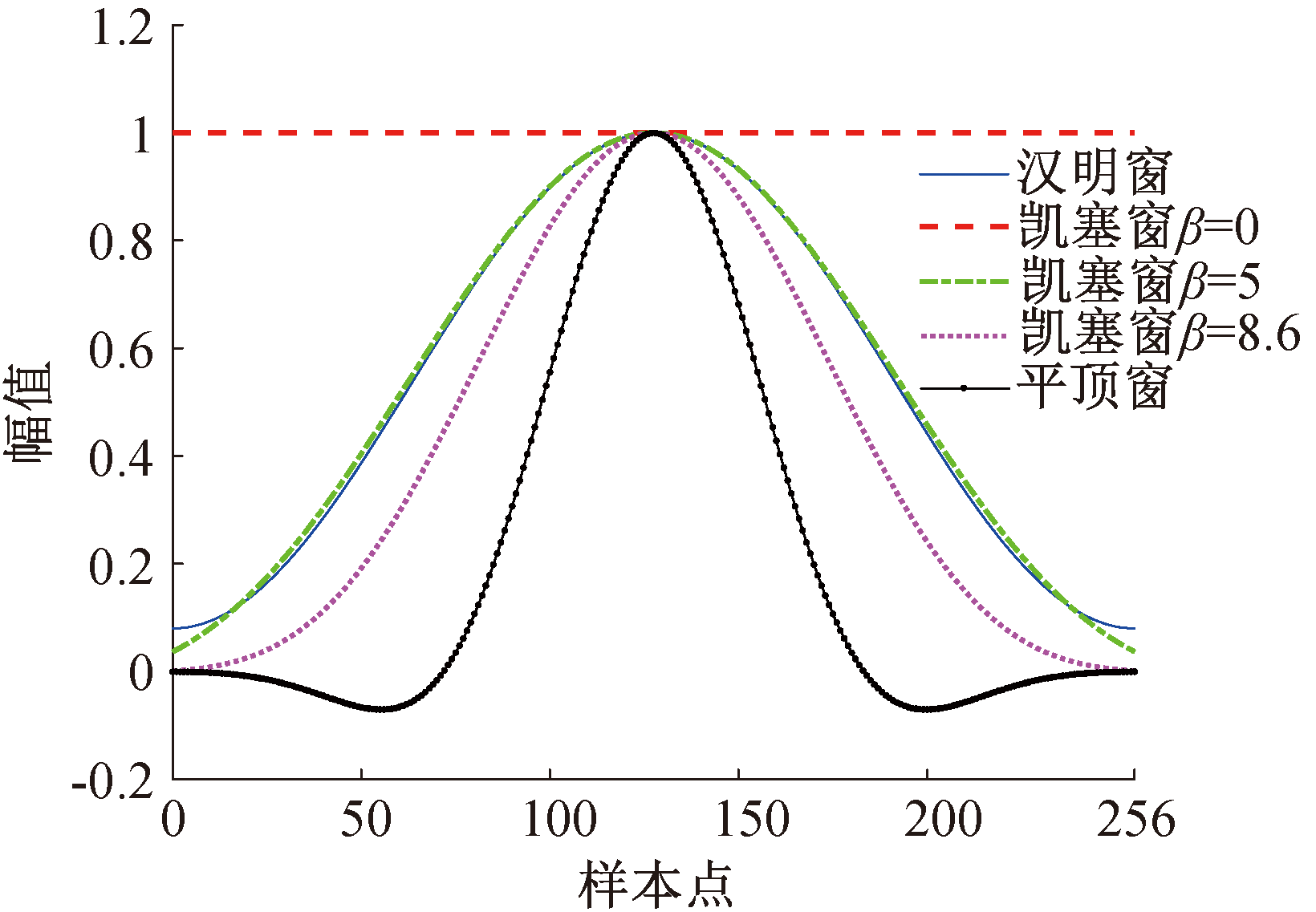
邢晓晴, 朱根民. Welch功率谱估计中窗函数的选择与算法分析[J]. 计算机时代, 2018(2):1-4.
|
|
XING Xiaoqing, ZHU Genmin. Window function selection and algorithm analysis in Welch power spectrum estimation[J]. Computer Era, 2018(2):1-4.
|
| [14] |
杨婧, 程乃平, 倪淑燕. Welch算法在弱信号检测中的性能分析[J]. 计算机仿真, 2020, 37(5):235-240.
|
|
YANG Jing, CHENG Naiping, NI Shuyan. Performance analysis of Welch algorithm in weak signal detection[J]. Computer Simulation, 2020, 37(5):235-240.
|
| [15] |
OPPENHEIM A V, SCHAFER R W, BUCK J R. Discrete-time signal processing[M]. Upper Saddle River: Prentice Hall, 1999: 475-487.
|
| [16] |
VASWANI A, SHAZEER N, PARMAR N, et al. Attention is all you need[C]. 31st Annual Conference on Neural Information Processing Systems (NIPS), 2017: 5998-6008.
|
| [17] |
|
| [18] |
李强, 马超, 黄民. 基于注意力的多尺度残差卷积网络轴承故障诊断[J]. 电子测量技术, 2025, 48(9) :19-26.
|
|
LI Qiang, MA Chao, HUANG Min. Attention-based multi-scale residual convolutional network for bearing fault diagnosis[J]. Electronic Measurement Technology, 2025, 48(9) :19-26.
|
| [19] |
LIAO Chunyan, LIANG Wei, YAO Junming, et al. Intelligent defect diagnosis for oil and gas pipeline based on lightweight CBAM-Inception-Resnet[J]. Chemical Engineering Research and Design, 2025, 218: 548-571.
doi: 10.1016/j.cherd.2025.05.030
|

 ), 梁伟1,2,**(
 京公网安备 11010502045206号