
中国安全科学学报 ›› 2026, Vol. 36 ›› Issue (7): 241-250.doi: 10.16265/j.cnki.issn1003-3033.2026.07.0446
王岩韬1( ), 胡雨寒2, 时统宇2,**()
收稿日期:2026-03-11
修回日期:2026-05-17
出版日期:2026-07-28
通信作者:
作者简介: |
王岩韬 (1982—),男,吉林磐石人,硕士,教授,主要从事飞行运行安全与管理等方面的研究。E-mail: CAUCwyt@126.com。 |
基金资助:
Wang Yantao1(), Hu Yuhan2, Shi Tongyu2,**()
Received:2026-03-11
Revised:2026-05-17
Published:2026-07-28
摘要:
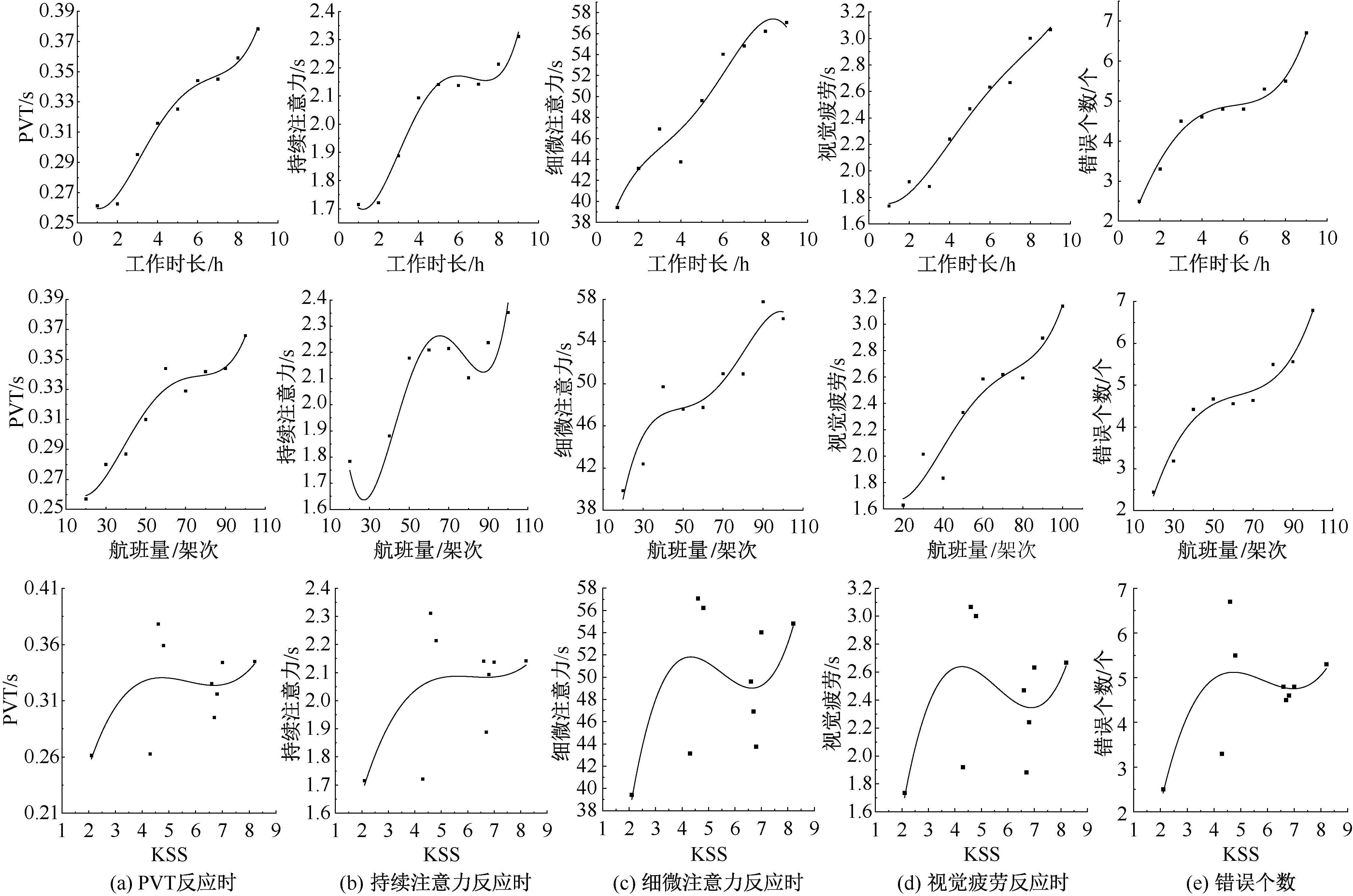
为准确测量与预测心理疲劳对民航飞行签派员反应时的影响,首先,选取97名航空公司飞行签派员作为被试,筛选出可有效反映心理疲劳情况的指标,设计并开发签派员心理疲劳反应时测试系统,按任务开展4批次测试;然后,结合飞行签派员警觉性三过程模型(TPMA),基于测试数据构建签派员心理疲劳反应时增长预测模型;最后,通过实测结果验证预测模型的有效性,并采用脑电(EEG)信号数据辅助验证。结果表明:反应时增长模型预测得到的持续注意力平均绝对占比误差为2%、细微注意力为3%、视觉疲劳为3%;嗜睡状态下的预测反应时与EEG信号数据平均相关系数为84%,当工作时间≥7 h时,平均反应时和错误个数分别增加14%和35%;航班量≥80架次时分别增加15%和30%;卡罗林斯卡嗜睡量表评分≥7时分别增加12%和39%。
中图分类号:
王岩韬, 胡雨寒, 时统宇. 民航飞行签派员心理疲劳反应时增长预测模型[J]. 中国安全科学学报, 2026, 36(7): 241-250.
Wang Yantao, Hu Yuhan, Shi Tongyu. A prediction model for reaction time growth due to psychological fatigue responses in civil aviation flight dispatchers[J]. China Safety Science Journal, 2026, 36(7): 241-250.
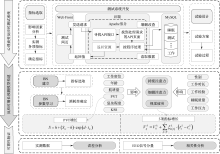
图1
技术路线 注:应用程序编程接口(Application Programming Interface,API);贝叶斯网络(Bayesian Network,BN)。
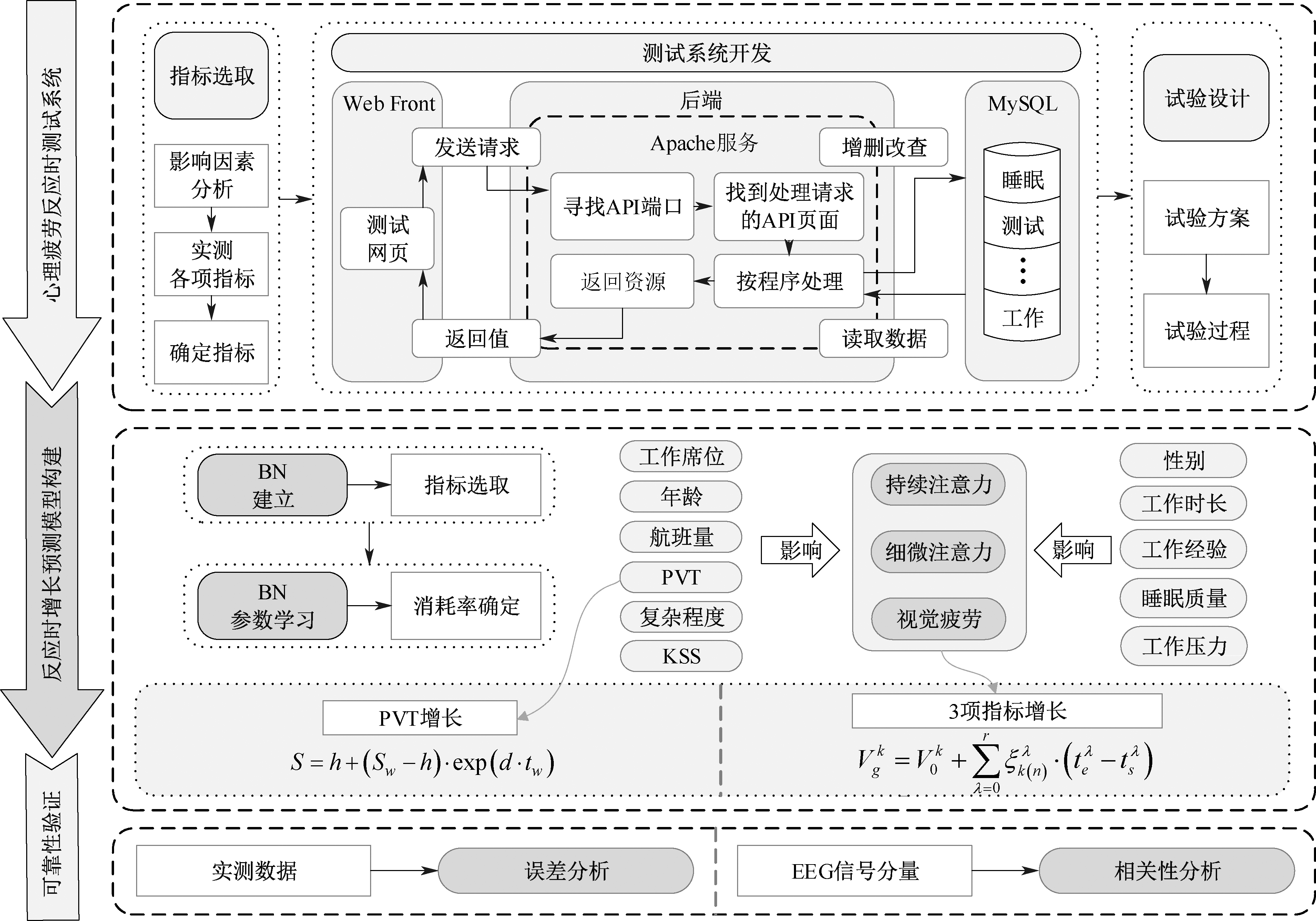
表1
指标情况
| 编号 | 文献 | 指标 | 类型 | 方法 | 优点 | 缺点 |
|---|---|---|---|---|---|---|
| 1 | [ | 警觉性 | 客观 | PVT | 行业适用 便于测试 | — |
| 2 | [ | 持续注意力 | 反应时测试 | |||
| 3 | [ | 细微注意力 | ||||
| 4 | [ | 视觉疲劳 | ||||
| 5 | [ | 体温 | 体温计 | |||
| 6 | [ | 年龄 | 问卷 | 易获取, 体现差异 | — | |
| 7 | [ | 性别 | ||||
| ︙ | ︙ | ︙ | ︙ | ︙ | ︙ | ︙ |
| 24 | [ | 主观嗜睡程度 | 主观 | KSS量表 | 易获取 行业适用,体 现个人差异 | 偏差大 |
| 25 | [ | 睡眠情况 | 斯坦福嗜睡量表,匹兹堡睡眠质量指数,视觉模拟量表 | |||
| 26 | [ | 工作经验 | 问卷 | |||
| 27 | [ | 工作席位 | 问卷 | |||
| 28 | [ | 工作时长 | 视觉模拟量表 | |||
| 29 | [ | 工作压力 | 视觉模拟量表,疲劳、情绪和知觉量表,情绪状态量表 | |||
| 30 | [ | 航班量 | 视觉模拟量表 |
表2
各项指标增长率
| 增长率/(ms/h) | u | b | v |
|---|---|---|---|
| 高增长 | 47.19 | 2 819.26 | 176.01 |
| 低增长 | 33.26 | 1 634.38 |
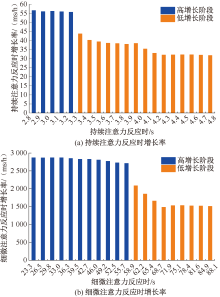
图2
持续、细微注意力增长率数据
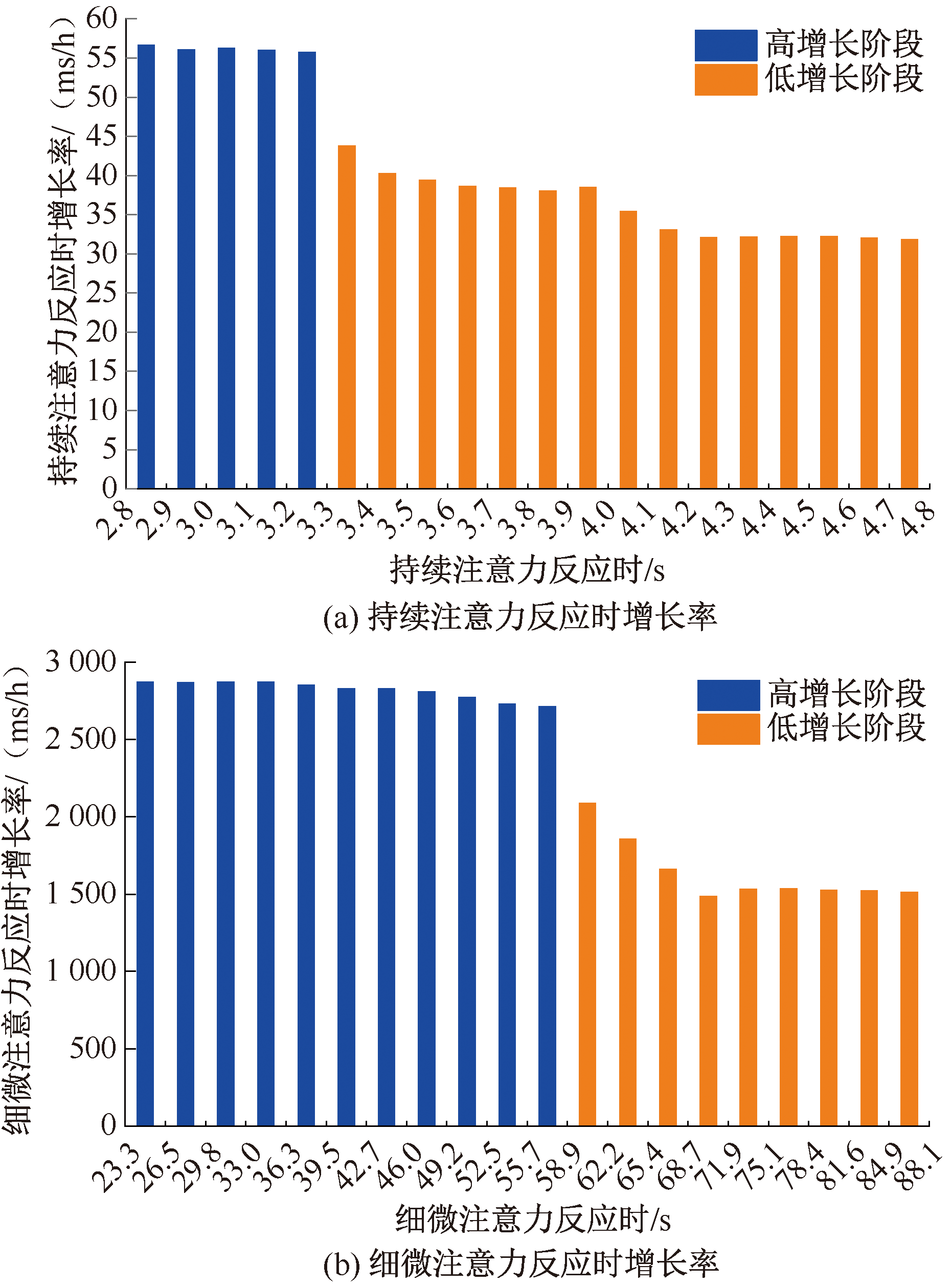
图3
BN结构
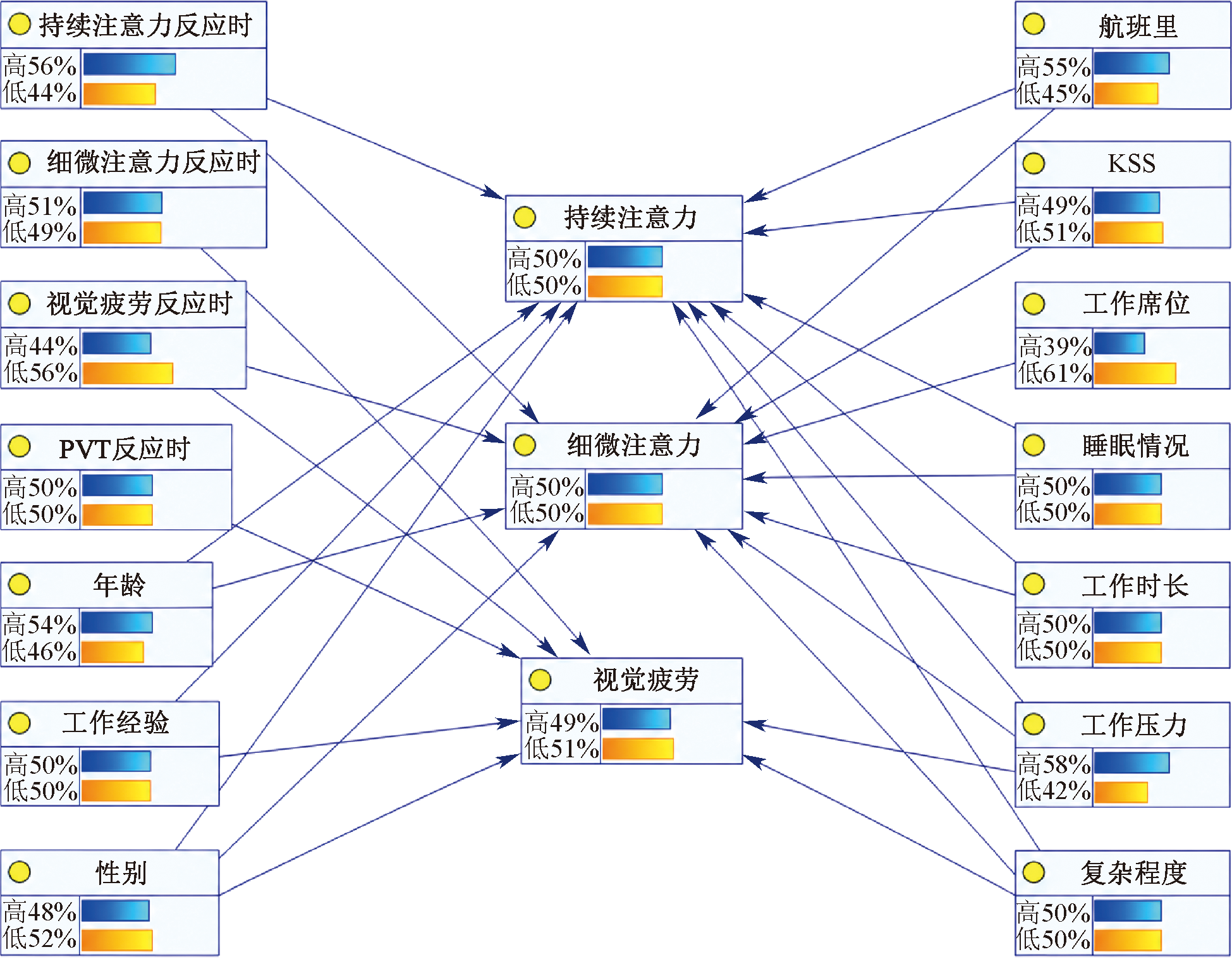
图4
被试者1号增长预测与实际情况对比 注:时间右上角“+1”表示夜班执勤的次日,该标注在后续所有图中含义相同。
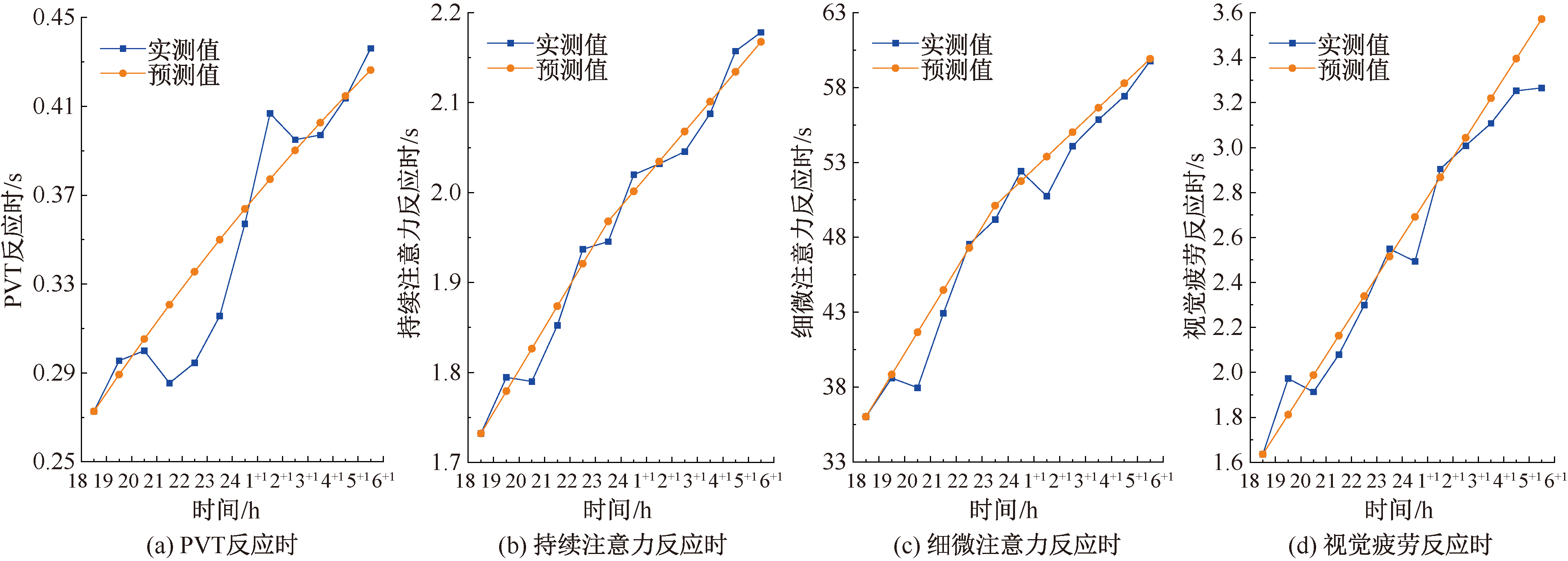
表3
各项指标误差情况
| 结果 | PVT | u | b | v |
|---|---|---|---|---|
| AE/ms | 6.42 | 47.40 | 1 076.28 | 61.21 |
| ME/ms | 5.91 | 53.43 | 1 064.28 | 43.47 |
| RMSE/ms | 6.53 | 47.15 | 1 077.47 | 62.15 |
| MAE/ms | 5.69 | 50.52 | 1 063.42 | 64.50 |
| MAPE/% | 2.21 | 2.24 | 2.62 | 3.47 |
| PA/% | 98.75 | 98.93 | 98.44 | 97.81 |
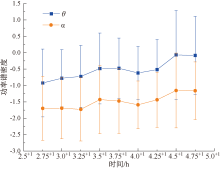
图5
被试者1号α、θ波PSD变化情况
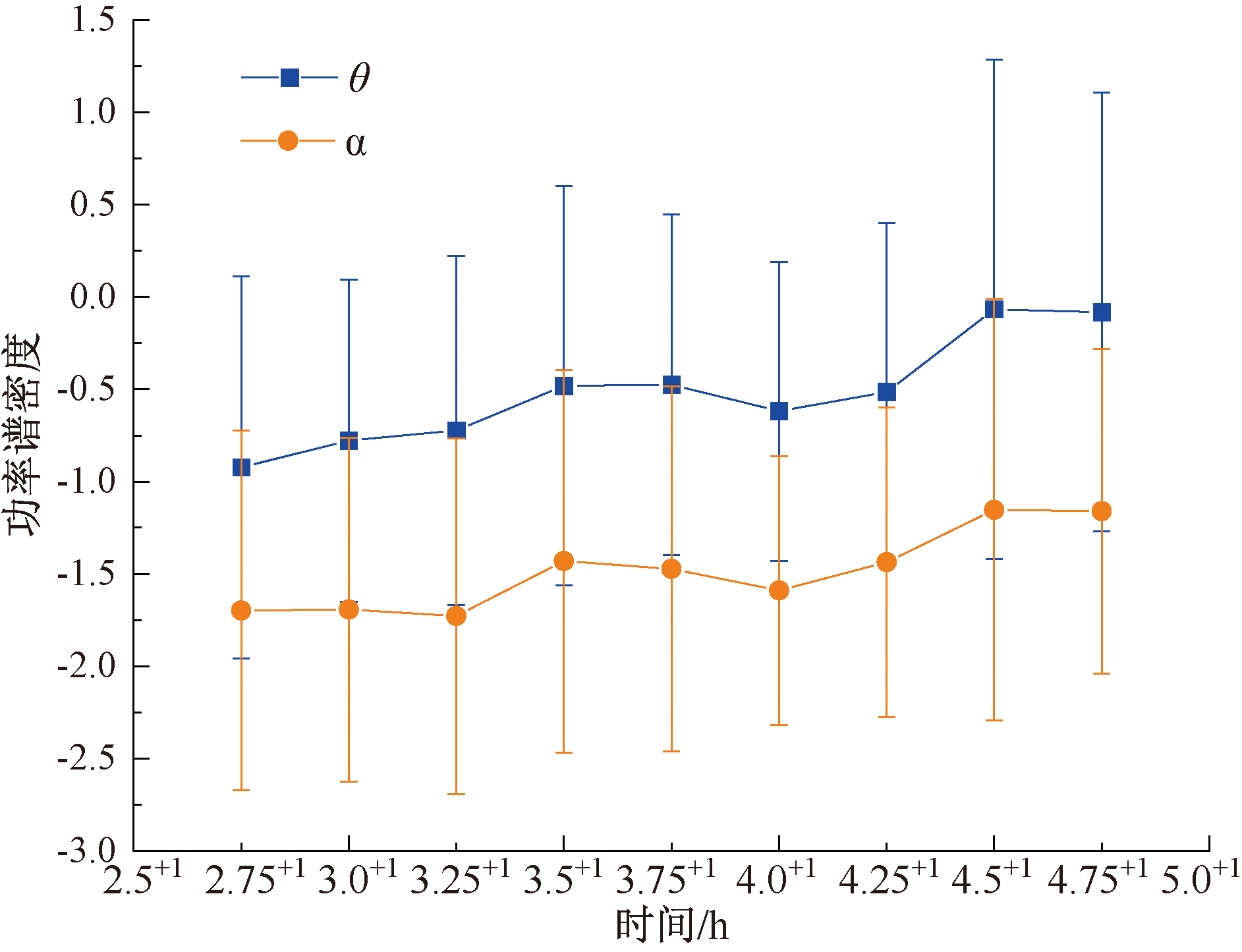
表4
相关性分析结果
| 被试 | 类型 | 预测反应时的p值和相关系数 | |||
|---|---|---|---|---|---|
| 指标 | PVT | u | v | b | |
| 1 | θ | 0.01/0.81 | 0.02/0.79 | 0.02/0.80 | 0.02/0.80 |
| α | 0.01/0.82 | 0.02/0.80 | 0.02/0.80 | 0.02/0.81 | |
| 2 | θ | 0.01/0.86 | 0.01/0.83 | 0.03/0.76 | 0.02/0.80 |
| α | 0.01/0.82 | 0.01/0.87 | 0.02/0.78 | 0.01/0.82 | |
| ︙ | ︙ | ︙ | |||
| 8 | θ | 0.02/0.78 | 0.01/0.84 | 0.03/0.76 | 0.01/0.83 |
| α | 0.02/0.80 | 0.01/0.85 | 0.02/0.78 | 0.02/0.81 | |
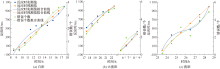
图6
3种班型出错个数与反应时曲线拟合对比
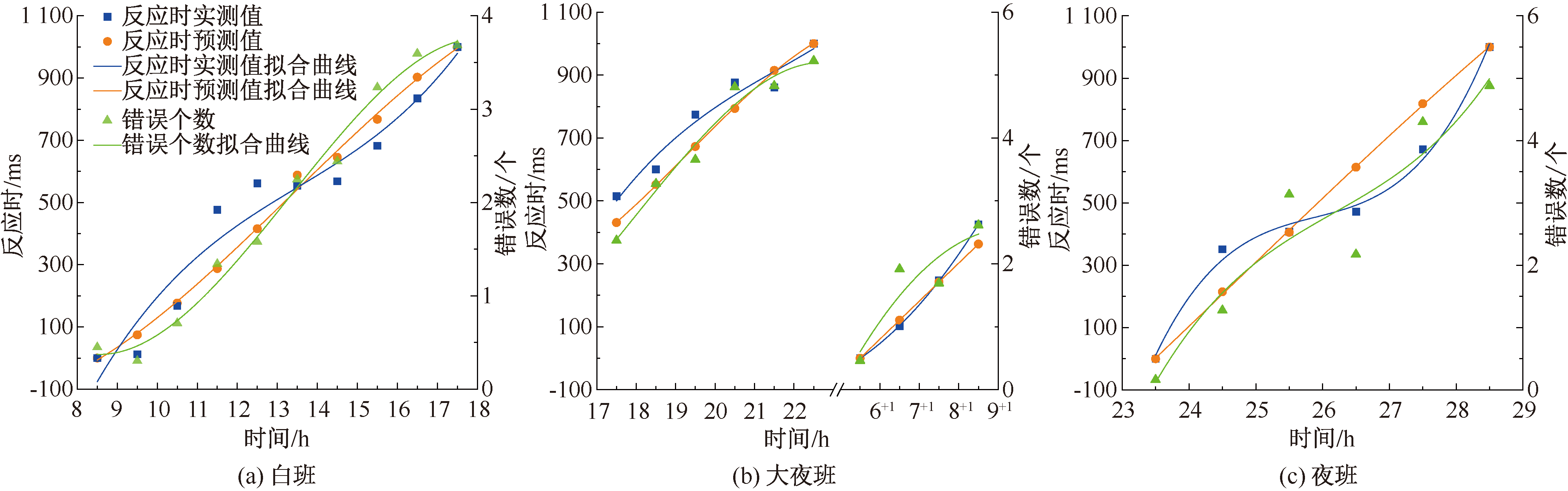
图7
3种班型KSS与EEG信号分量曲线拟合对比
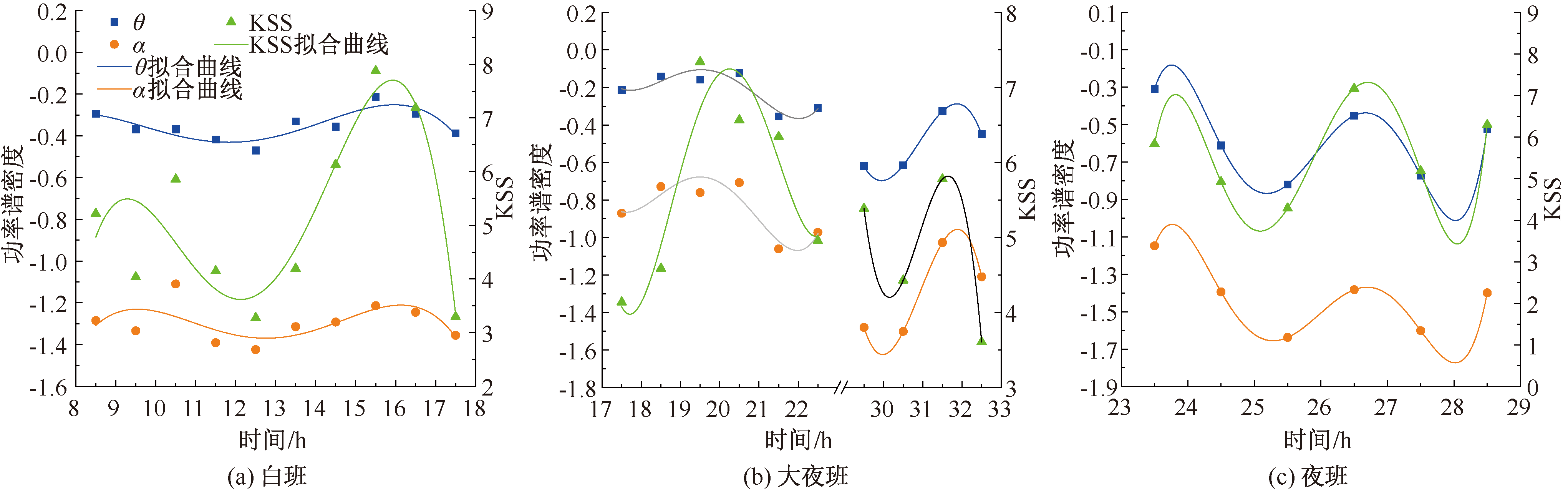
图8
反应时指标与错误个数随工作时长、工作量及KSS这3项指标增加的变化趋势
| [1] |
doi: 10.1007/s40279-016-0672-0 pmid: 28044281 |
| [2] |
pmid: 4421761 |
| [3] |
doi: 10.1016/0160-2896(83)90008-9 |
| [4] |
National Aeronautics and Space Administration,Aviation Safety Reporting System. ASRS database report set: fuel management issues[R/OL], 2024. https://asrs.arc.nasa.gov/docs/rpsts/fuel.pdf.
|
| [5] |
|
| [6] |
doi: 10.3758/BF03200977 |
| [7] |
pmid: 10643755 |
| [8] |
|
| [9] |
pmid: 15018265 |
| [10] |
doi: 10.1016/j.aap.2009.12.030 |
| [11] |
|
| [12] |
doi: 10.1016/j.trf.2021.04.006 pmid: 33994837 |
| [13] |
|
| [14] |
pmid: 22097638 |
| [15] |
王岩韬, 王则政, 时统宇. 飞行签派员警觉性预测三过程模型[J]. 中国安全科学学报, 2023, 33(10):104-110.
doi: 10.16265/j.cnki.issn1003-3033.2023.10.1471 |
|
doi: 10.16265/j.cnki.issn1003-3033.2023.10.1471 |
|
| [16] |
doi: 10.1080/10803548.2018.1456796 pmid: 29570043 |
| [17] |
|
| [18] |
孙瑞山, 陈毅, 孙立斌. 基于CFF的管制员疲劳评估方法[J]. 中国安全科学学报, 2022, 32(4):192-197.
doi: 10.16265/j.cnki.issn1003-3033.2022.04.028 |
|
doi: 10.16265/j.cnki.issn1003-3033.2022.04.028 |
|
| [19] |
|
| [20] |
|
| [21] |
|
| [22] |
doi: 10.1016/j.actpsy.2009.10.001 pmid: 19878913 |
| [23] |
doi: 10.1016/j.neuropsychologia.2010.05.002 pmid: 20452366 |
| [24] |
pmid: 17435346 |
| [25] |
|
| [26] |
|
| [27] |
ICAO. Manual for the oversight of fatigue management approaches[R], 2016.
|
| [28] |
|
| [29] |
|
| [30] |
doi: 10.1111/jsr.12158 pmid: 24750198 |
| [31] |
doi: 10.5935/1984-0063.20210002 pmid: 35371410 |
| [32] |
|
| [33] |
|
| [34] |
doi: 10.1111/jsr.12371 pmid: 26762182 |
| [35] |
doi: 10.1109/TSMCA.2005.855922 |
| [36] |
doi: 10.1016/j.biopsycho.2014.07.014 pmid: 25088378 |
| [37] |
pmid: 26485967 |
| [38] |
doi: 10.1109/TNSRE.2020.3007324 pmid: 32746312 |
| [39] |
pmid: 8746397 |
| [1] | 朱伟, 盛燕珍, 宋佳云, 赵逸凡. 基于贝叶斯网络的城市燃气事故隐患识别与致因分析[J]. 中国安全科学学报, 2026, 36(6): 178-185. |
| [2] | 孙凤琳, 王文宇, 李鹏, 刘畅. 融合FTA-BN的四网融合车站电气火灾模型[J]. 中国安全科学学报, 2026, 36(6): 213-221. |
| [3] | 王海军, 张玥. 基于贝叶斯的受限空间作业情景构建与风险分析[J]. 中国安全科学学报, 2026, 36(5): 38-47. |
| [4] | 李知键, 佘健俊, 路聪, 郭子豪, 周逸伦. 基于FRAM-BN的施工安全突发事件应急管理能力评价[J]. 中国安全科学学报, 2026, 36(2): 199-208. |
| [5] | 刘坤琦, 杨涓, 李子依, 李鹏, 吴建松, 刘畅. 基于BN-MC的极端天气下城市新型电力系统风险评估[J]. 中国安全科学学报, 2026, 36(1): 157-166. |
| [6] | 李佳音, 谭德强, 钱祎祎. 面向山岳风景区旅游用大型载人eVTOL的运行风险研究[J]. 中国安全科学学报, 2025, 35(S1): 210-216. |
| [7] | 江松, 刘迪真, 陈盈, 蒋国炜, 徐中华, 何润丰. 基于脑电信号的不同照度对矿工注意力的影响研究[J]. 中国安全科学学报, 2025, 35(9): 113-120. |
| [8] | 李嵘, 刘清, 王磊, 钟悦, 兰毓峰, 南航. 基于SNA-BN的三峡船闸预约调度模式社会风险评估[J]. 中国安全科学学报, 2025, 35(8): 148-155. |
| [9] | 闫浩然, 李明, 徐霞, 蒋祥婷. 心理疲劳对建筑工人不安全行为的影响机制[J]. 中国安全科学学报, 2025, 35(7): 15-21. |
| [10] | 付建民, 梁正弹, 王俊杰. 基于STAMP复合方法的危化品罐区泄漏事故致因分析[J]. 中国安全科学学报, 2025, 35(6): 70-78. |
| [11] | 王威, 龚玉涿, 朱峻佚, 夏陈红, 郭小东. 城市建筑群抗震韧性集成评估方法[J]. 中国安全科学学报, 2025, 35(4): 219-226. |
| [12] | 方丹辉, 曾倪萍, 王佩佩. 考虑应急主体心理的山区突发暴雨灾害情景推演[J]. 中国安全科学学报, 2025, 35(12): 221-229. |
| [13] | 闫林君, 刘晶晶, 王亚妮, 陈慧鑫. 基于故障树和模糊BN的地铁工程技术接口施工风险评估[J]. 中国安全科学学报, 2025, 35(11): 24-31. |
| [14] | 杨文家, 吴良洪, 林卫东, 阳富强. 基于模糊贝叶斯网络的城市排水管网风险评估[J]. 中国安全科学学报, 2025, 35(10): 174-180. |
| [15] | 柳青, 沈恬. 基于贝叶斯网络的生物样本无人机运输风险评估[J]. 中国安全科学学报, 2025, 35(1): 16-24. |
| 阅读次数 | ||||||
|
全文 |
|
|||||
|
摘要 |
|
|||||
 京公网安备 11010502045206号
